
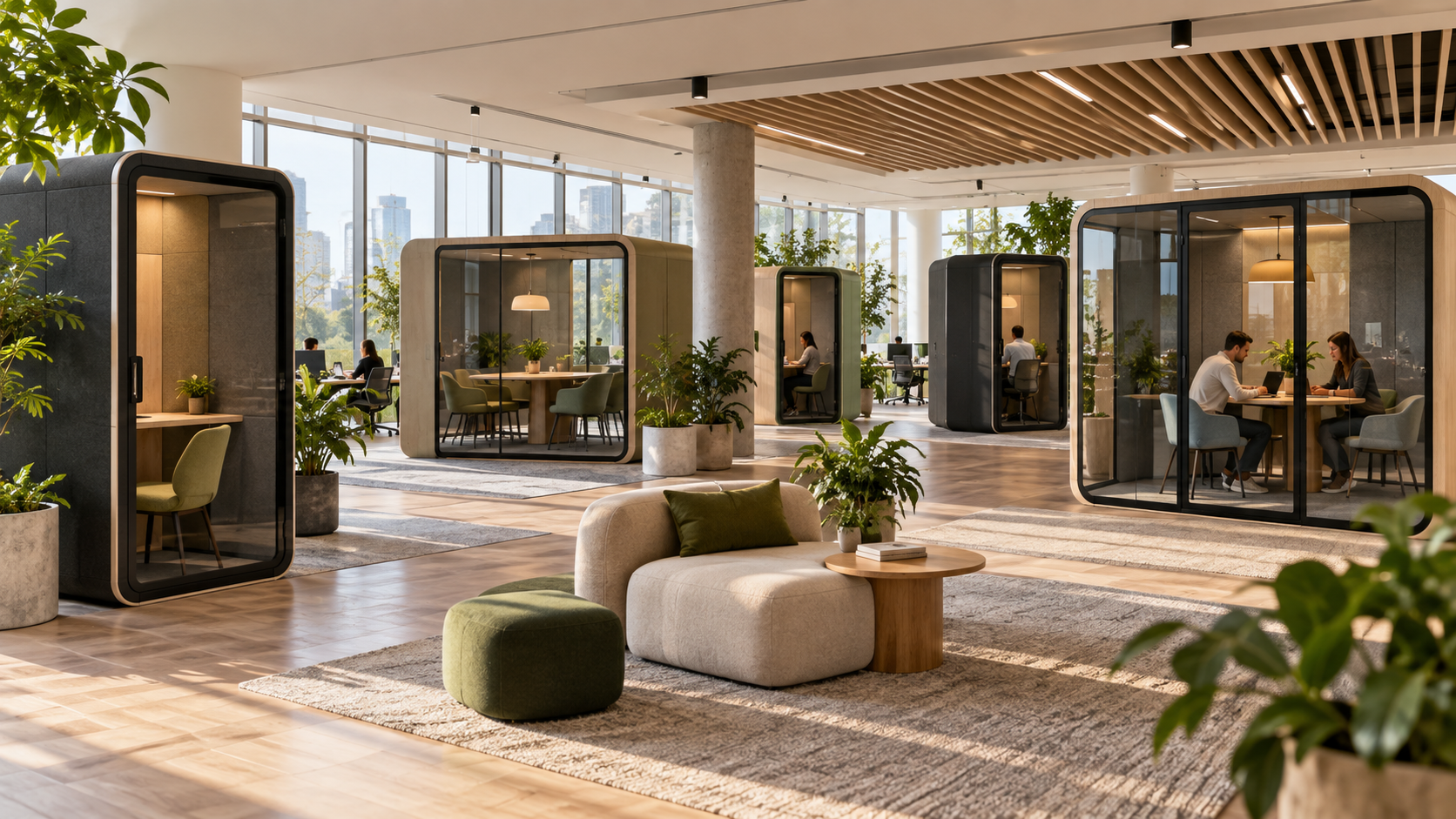
A single office pod can solve an immediate problem. A group of pods can either make the workplace easier to use or create a confusing, crowded corner that people avoid. The difference is planning.
A “pod neighborhood” is a deliberate cluster of private or semi-private workspaces. It can include phone booths, focus pods, and small meeting pods, but should never feel like a row of products dropped into leftover space. The aim is work that is easy to find, comfortable to use, and compatible with the rest of the office.
Let real work habits determine the location
Start by observing where privacy demand arises. Teams often need call space near their desks, but not directly within the busiest collaboration zone. A pod neighborhood should be close enough to be convenient and far enough away that entering and leaving does not create a disruption.
Think about the journeys users take. Someone joining a short video call should be able to reach a suitable space without crossing a formal meeting, weaving through a crowded kitchen, or feeling as though they are interrupting a team. Equally, colleagues working nearby should not have to listen to a constant sequence of doors opening, calls starting, and people gathering outside.
Look at the character of adjacent areas. Pods near quiet desk neighborhoods may need particularly careful treatment of traffic and waiting. Pods near team spaces may be more accessible but need protection from nearby conversations. There is no universally correct location; the right location reflects the office’s daily rhythms.
Build a purposeful mix, not a uniform row
Not every private activity needs the same space. A workplace with only single-person booths may still struggle when people need a quick two-person conversation. A workplace with only meeting pods may waste valuable capacity on short calls.
A balanced neighborhood typically offers a mix of spaces, each with a clear job. Phone booths support calls and short video meetings. Focus pods can suit longer individual work requiring privacy and a more settled setup. Meeting pods support small conversations that would otherwise take place in open-plan areas or oversized meeting rooms.
The mix should reflect observed demand. If a team regularly holds project check-ins in pairs, a compact meeting pod may be more valuable than another large room. If hybrid calls dominate the day, favor individual video-call spaces.
Naming and visual cues can help people make the right choice quickly. Labels such as “Calls,” “Focus,” and “Meet” are more useful than vague or decorative names when someone needs a space immediately. Clear expectations also reduce frustration when a larger pod is occupied by one person taking a short call.

Give the neighborhood enough support
A pod cluster needs more than the pods themselves. People require nearby circulation space, an intuitive route in and out, and somewhere to wait briefly without blocking a passage. If every user has to stand in a busy aisle while waiting, the neighborhood will feel inconvenient even if the pods are well specified.
Consider the supporting details that shape day-to-day use: power access, reliable connectivity where required, lighting, clean sightlines, and nearby waste or cleaning arrangements. These are not glamorous decisions, but they influence whether spaces feel easy to use or faintly improvised.
Avoid treating the area outside the pod doors as informal collaboration space unless that is intentional. Conversations outside a private pod can undermine the calm users expect inside it, especially where several booths are grouped together. If the neighborhood is near a social area, create enough separation that each zone can work on its own terms.
Make behavior clear without over-policing it
Well-designed spaces still need simple social rules. People should understand whether a pod is for quick calls, longer focus work, or small meetings; whether it can be reserved; and how to leave it ready for the next user.
The rules should be easy to follow rather than overly formal. A concise sign, calendar label, or booking convention can prevent recurring friction. Booking can be useful for meeting pods, particularly where demand is concentrated, but a system that is too rigid can make a pod neighborhood less spontaneous and push people back into open areas.
Design for access, comfort, and inclusion
A successful neighborhood should be usable by a broad range of people. Account for clear approach routes, door operation, internal room to move, seating needs, and the experience of visitors or colleagues who may not use the office every day. Accessibility should be considered at the planning stage, not retrofitted after the area is full.
Comfort matters as well. A space that feels cramped, overheated, or difficult to operate will be used reluctantly, regardless of how attractive it looks on a floor plan. Consider how people will use a laptop, take notes, join a video call, or meet with a colleague.
Pilot, observe, and adjust
Pod neighborhoods become more effective when they are treated as a living part of the workplace. Once in use, observe what happens: which spaces are constantly occupied, which are avoided, where queues form, and where nearby noise causes friction.
Feedback should lead to practical adjustments. That might mean changing labels, revising booking rules, relocating a shared table, or altering the mix in a future phase. A good pod neighborhood quietly removes everyday obstacles: people can find the right kind of privacy, return to their work easily, and use shared space with less negotiation.