

A workplace privacy problem can look deceptively simple: people need somewhere to take calls, hold a confidential conversation, or meet without disturbing the rest of the office. The solution is less simple. Should you install a meeting pod, build a room, or combine both approaches?
Neither option is automatically better. A well-planned pod can create useful privacy with less disruption, while a properly designed built room can become an enduring part of the workplace. The right choice depends on how your team works, how often the space may need to change, and what the building will realistically support.
Begin with the work, not the product
Before comparing specifications or finishes, define the situations the new space must handle. “More meeting rooms” is usually too broad to guide a good decision. List the recurring activities that currently create friction: short video calls, one-to-one conversations, interviews, project huddles, sensitive discussions, or small meetings that spill into larger rooms.
Then consider whether people need visual privacy, speech privacy, room to work on a screen, or simply a place away from ambient noise. The duration and predictability of use matter too. A space used intermittently for short calls has different requirements from one occupied for long meetings. If people need to leave quickly, see whether a room is free, and start a call without technical setup, ease of access may matter as much as acoustic performance.
It is also worth asking who will use the space. A room designed only around one working style can become awkward for visitors, hybrid teams, people using mobility aids, or colleagues who need additional personal space. The decision should solve for the full range of likely users, not just the loudest current complaint.
Compare the two paths in everyday use
Construction generally creates a more permanent answer. A built room can be shaped around a particular use, integrated with building systems, and planned as part of a wider workplace layout. It may suit organizations that have a stable long-term footprint and need a space with a highly specific function.
That permanence can also be a limitation. Once walls, services, doors, and finishes are in place, changing the layout is more involved. A room built for a particular team or meeting style may become less useful if headcount, work patterns, or the office footprint changes.
Meeting pods offer a different kind of flexibility. They can be placed within an existing floorplate, chosen in different sizes, and in some cases relocated if the workplace is reconfigured. This can make them useful where a team is testing a new layout, occupying a leased office, or needs to add privacy without embarking on a full construction project.
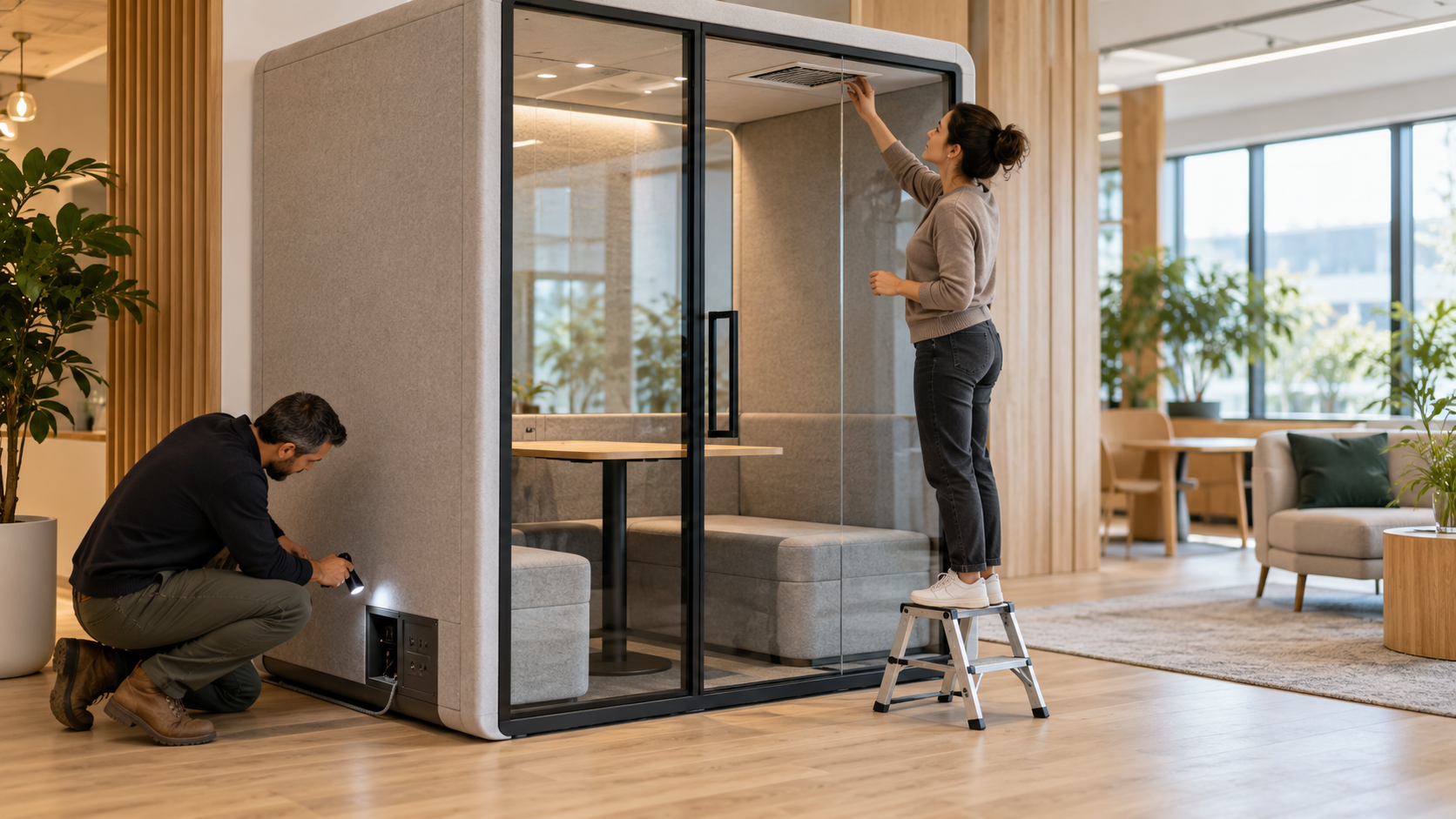
However, a pod is not just a small room in a box. Its footprint, access clearance, power requirements, ventilation, internal comfort, and delivery route all need to work. It should also be positioned with the surrounding office in mind. A private pod beside a noisy collaboration area may not create the user experience people expect, even if the product itself is well specified.
Look beyond the purchase decision
A construction project can involve coordination with landlords, building management, designers, contractors, and relevant approvals. The lead time and complexity can be worthwhile when the result is central to a long-term workplace strategy. But it is important to account for the operational burden, not merely the finished room.
Pods can reduce some disruption, but they still require careful planning. Confirm how the unit will enter the building, where it will be assembled, and whether lifts, corridors, loading areas, or ceiling conditions create constraints. Consider power, network needs, fire-safety requirements, cleaning access, and who will deal with servicing over time.
Acoustics deserve particular care. A pod or room may improve speech privacy, but the outcome depends on the product, installation, surrounding noise, and how it is used. When comparing products, look for clearly stated test methods and avoid treating differently measured claims as interchangeable. A good decision brief should specify the level of privacy required rather than relying only on marketing language.
Create a decision brief before you specify anything
A short written brief helps avoid a product-led decision. It should state:
- The activities the space must support.
- The expected mix of solo, two-person, and group use.
- The need for visual and speech privacy.
- The likely office term and appetite for future change.
- Building, access, and service constraints.
- The experience expected for users and guests.
With that brief in hand, assess a built room and a pod against the same criteria. This creates a fair comparison and exposes trade-offs early. A permanent room may score strongly on customization but poorly on flexibility; a pod may score strongly on speed and adaptability but require more disciplined location planning.
Choose for change, not just today
Many workplaces will benefit from a hybrid approach. Built rooms can serve activities that need permanence or larger capacity, while pods can provide additional private space near the teams who need it most. This avoids forcing every type of work into one format.
The useful answer is the one that supports people now without making tomorrow’s workplace harder to adapt. Treat the decision as part of a wider workplace plan, not a one-off furniture purchase or construction project.