
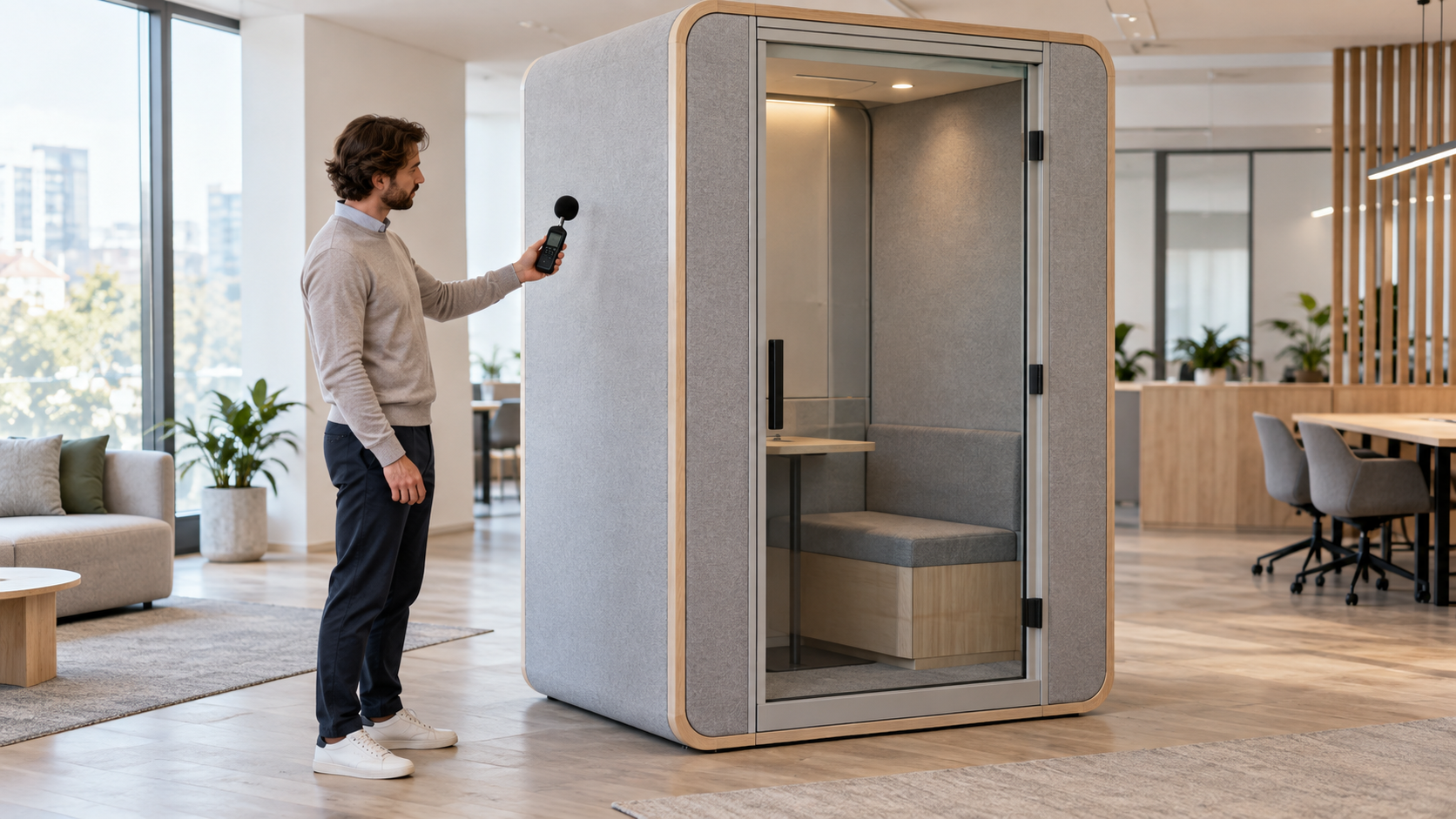
Acoustic performance is one of the first things people look for when comparing office phone booths and meeting pods. It is also one of the easiest areas to misunderstand. A product page may show a decibel figure, an acoustic class, or a simple promise of privacy. Those statements can be useful, but they do not all answer the same question. A confident buying decision comes from understanding what has been measured, how it was measured, and what can fairly be compared.
What an acoustic rating is trying to describe
At a basic level, an acoustic rating is intended to communicate how sound behaves when a pod is in use. Buyers usually want to know two things: whether conversations inside are less audible outside, and whether people inside are protected from surrounding office noise. Both matter, but they are not identical. A result that describes one side of the experience should not automatically be read as proof of the other.
It is important to separate acoustic information from broader product quality. A pod can have a well-designed interior, useful technology, and a compelling price while still publishing limited acoustic evidence. Conversely, a strong acoustic result is not a complete purchasing case by itself. It needs to sit alongside capacity, layout, ventilation, lighting, lead time, installation, warranty, and total project cost.
Why a single decibel number is not enough
A published decibel-reduction number can look precise, but precision is not the same as comparability. The result may depend on the method used, the test setting, the part of the product being assessed, and the way the outcome is presented. Two numbers that use the same unit may still describe different measurement approaches. That is why a simple league table of the highest number can give a misleading impression.
Look for context around the claim. Does the source name an independent test? Does it identify a recognised standard? Does it say whether the result is an average, a maximum, or another reported value? Is a complete report available on request? A clear source trail allows a buyer to understand the evidence. An isolated figure should be treated more cautiously, even if it sounds impressive.
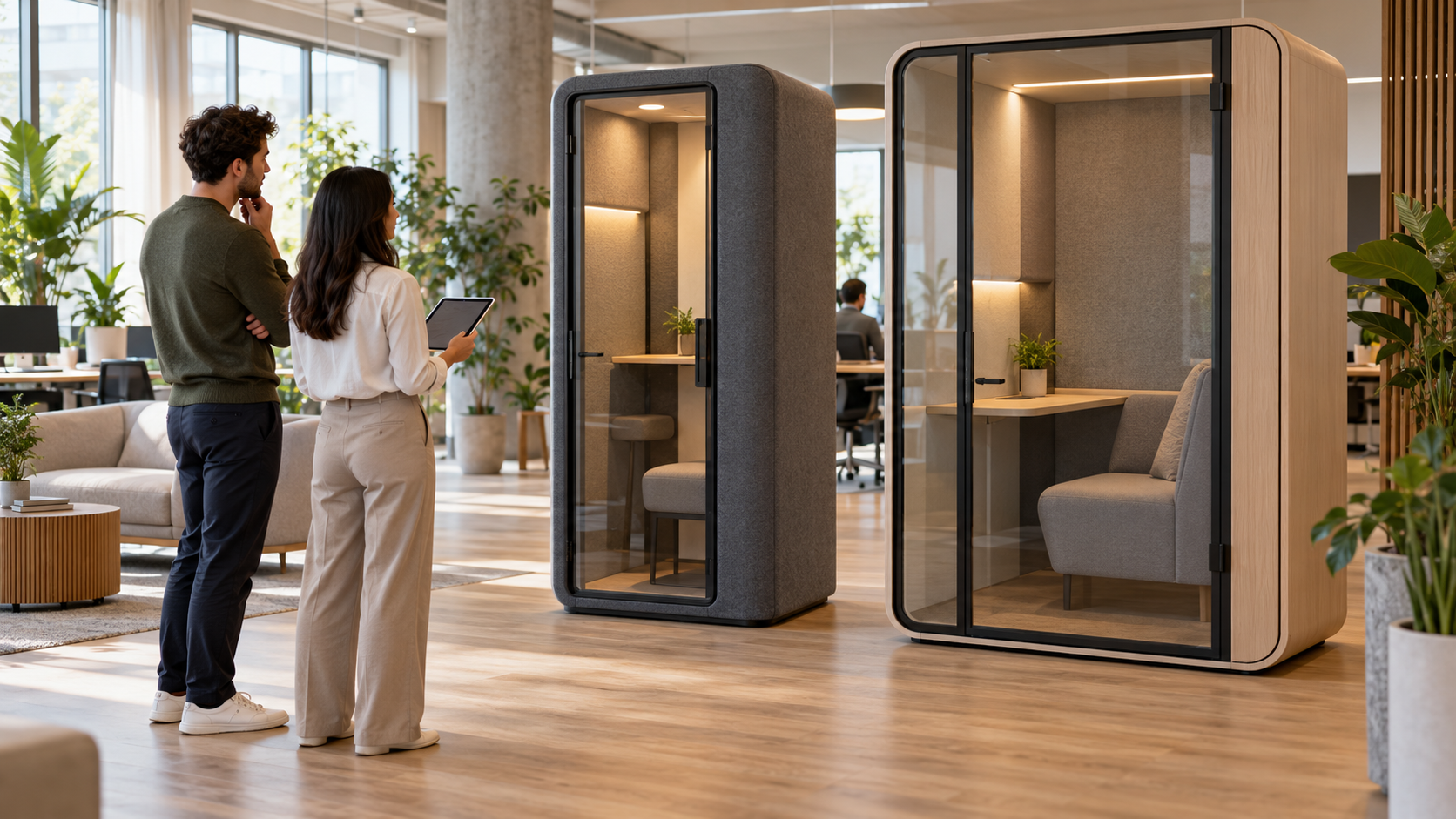
The practical value of ISO 23351-1:2020
For office pods, ISO 23351-1:2020 provides a common framework for presenting acoustic performance. Only acoustic rating results tested according to ISO 23351-1:2020 can be objectively compared across models. If two products publish results to that standard, their stated classes provide a more meaningful basis for comparison than unrelated marketing claims or differently presented figures.
This does not mean an ISO-tested rating answers every workplace question. The finished experience will still be shaped by the office itself: nearby activity, room acoustics, the type of conversation, how the pod is used, and the expectations of people around it. However, a common standard gives the procurement team a clearer starting point. It helps distinguish documented evidence from general assertions and makes a comparison table more honest.
How to treat self-reported claims
Self-reported acoustic figures should not be discarded, but they should be labelled accurately. They may be helpful as a supplier’s published indication, particularly when no ISO-tested class is available. The key is not to position them as directly equivalent to a result tested according to ISO 23351-1:2020. In a comparison, record the wording as supplied and state that it is self-reported or that the test basis has not been published.
When a model is on the shortlist, ask focused follow-up questions. Which test method was used? Who carried it out? What product configuration was tested? Is the full report available? What does the claimed number represent? These questions are not adversarial; they simply ensure that a decision maker knows what evidence is being relied on. If the supplier cannot provide context, reflect that uncertainty in the decision record.
Build an acoustic review that supports a real decision
Create one row for each product and capture the exact published wording, named standard, test source, whether the result is independently documented, and unanswered questions. Avoid converting different claims into a homemade ranking. Instead, group evidence by confidence: results tested to ISO 23351-1:2020, other published test information, and self-reported or unpublished claims.
Then combine the evidence with a practical trial wherever possible. Listen from outside while a typical call takes place inside, and try the intended activity inside while normal office noise is present. A trial cannot replace a standardised result, but it can reveal whether the pod works for the specific location, team, and use case. Record observations consistently and do not ask one product to meet a test that the others were never given.